I’ve been searching for the answer to a question: Why does my phone always steal my time, even when I want to focus?
From exam preparation in school, to meetings and deep tasks at work, and now occasionally taking care of my child, I’ve found that no matter the environment, the phone is always there, “easily accessible and silently stealing my attention.”
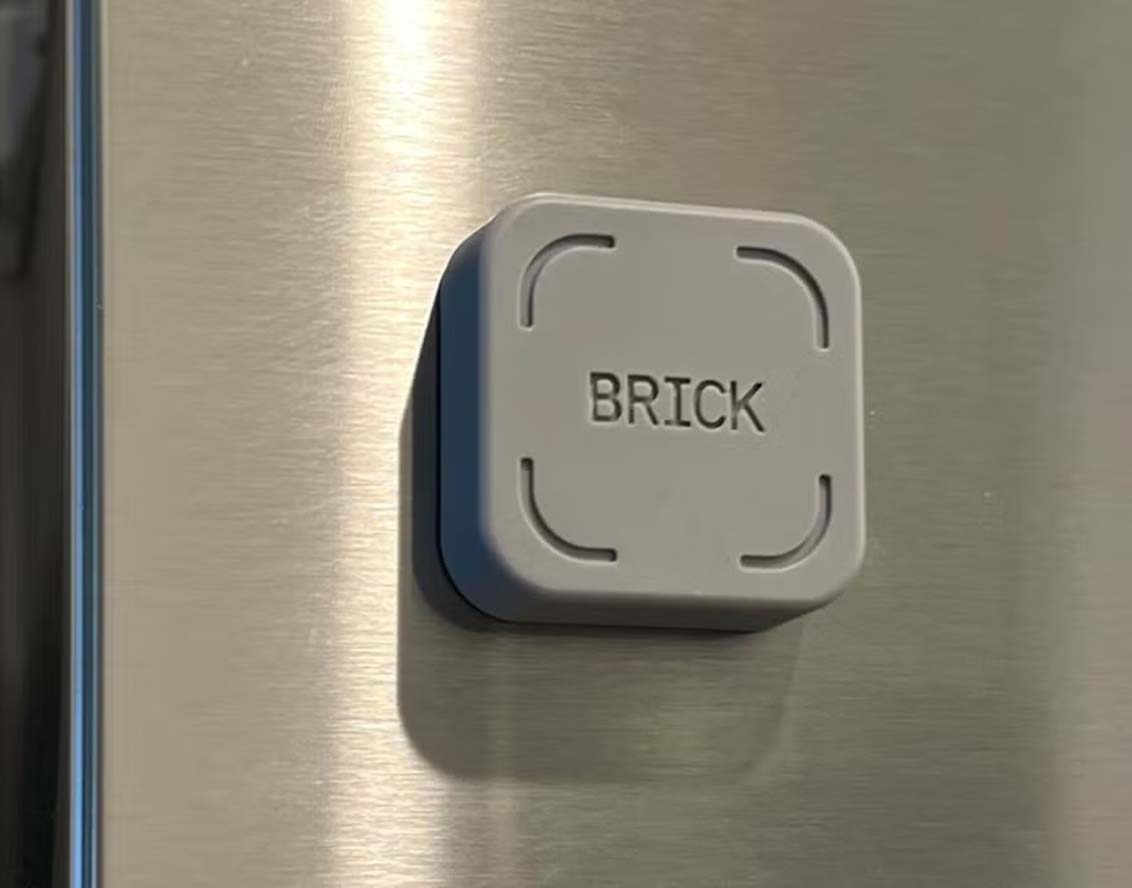
I’ve tried app reminders, screen time, and app limits—effective in the short term, but almost ineffective in the long term. It wasn’t until I tried Brick that I truly discovered: physical barriers combined with mode management are more effective than any self-discipline reminder.
Over the past month, I’ve used Brick in different aspects of my life, from exam preparation to deep work at work, and even breaking screen time before bed. I’ve summarized practical methods for each scenario, and the results have exceeded my expectations.
Students: Doubled Focus Time for Exam Preparation and Home
I initially tried Brick to get back into exam preparation mode. Before, when I sat at my desk, thinking I’d only do homework for an hour, I’d end up picking up my phone every five minutes to scroll through TikTok or check game notifications. My concentration only lasted about 25 minutes.
I set up a Study mode, blocking TikTok, Kuaishou, games, and social media apps. Then I placed Brick in the living room or my parents’ room—a form of physical isolation.
At first, it felt a little strange; every time I wanted to reach for my phone, I’d think, “I have to get Brick.”
Interestingly, this small friction unexpectedly extended my concentration. I could easily work on my homework for over 60 minutes straight without being interrupted by my phone. The quality and efficiency of my homework significantly improved.
I also discovered a little trick: after completing a section of study material, I’d gently place Brick at the far end of my desk, creating a “short break + reflection” period. Over time, not only did my attention span lengthen, but I also felt more at ease.
Workplace: Deep Work, Meetings, Enhanced Concentration
After entering the workforce, my most frequent problem was: during meetings or deep work, my phone acted like a magnet, drawing my attention. Even if the meeting content was important, I’d still secretly open social media or news apps.
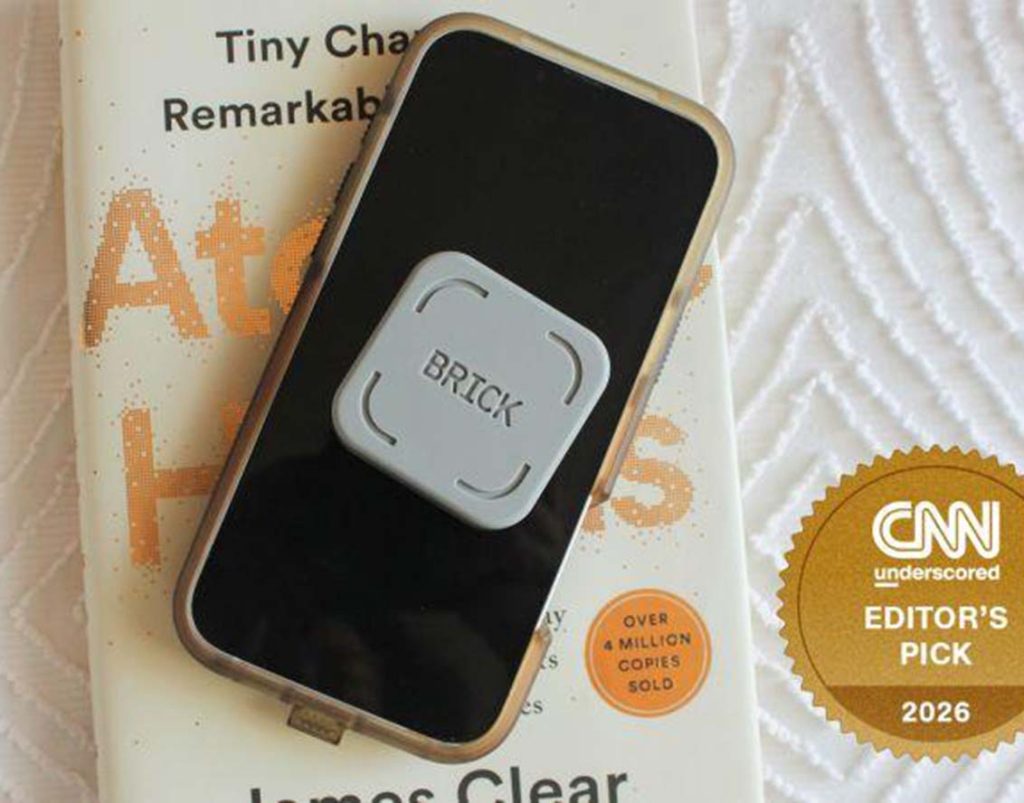
I set up Brick‘s Deep Work mode, blocking all social media, shopping, and news apps. Then I kept Brick in my office drawer, out of reach, meaning I had to get up to retrieve it to use my phone.
The first time I tried it, I clearly felt my attention being “forced” back onto my work tasks.
For two consecutive hours, I focused solely on documents, spreadsheets, and emails. Looking back afterwards, my work efficiency was at least 30% higher than before.
More importantly, the psychological cue created by this physical step made me less likely to unconsciously open my phone after get off work. Deep work not only extended into the office but also influenced my entire sleep schedule and attention management.
Mothers: Doubled the Quality of Time with Kids and Family
After having children, time spent with them is often fragmented. Phones are almost always readily available for entertainment, but over time, the quality of time spent with them severely declines.
I set up Family Time mode, leaving only phone calls and a few parenting-related apps enabled. Placing the Brick in the living room or a safe area where the child plays means that the opportunity to use my phone while taking care of the child is forcibly cut off.
Initially, the child was curious why I wasn’t on my phone, but quickly got used to it. I was surprised to find that: before, I would only spend 30 minutes with my child, and my attention was often distracted by my phone; now, even if it’s only half an hour, I can be fully engaged. The child’s response is more positive, and I feel more relaxed myself.
Tip: You can use the Brick in conjunction with an alarm clock or timer to synchronize parent-child time and sleep schedules, creating an “executable plan” and reducing the temptation of the phone.
For insomniacs: No screen time before bed, improved sleep quality
In the past, I often stayed up late scrolling on my phone, and my mental state was terrible the next day. I had tried “no phone before bed” reminder apps before, but I could always easily bypass them.
I set a Sleep mode: blocking all entertainment apps, including short videos, social media, and games, one hour before bedtime. The Brick is placed outside the bedroom or on the other side of the bedside table.
My first attempt at this physically interrupted my pre-sleep screen-checking urge, surprisingly shifting my attention from the screen to reading a physical book or meditating. After two weeks, my sleep duration increased by over 30 minutes, and I fell asleep faster. My morning alertness also improved significantly.
General Setup Template: 10 Must-Block Apps + 3 Frequently Used Modes
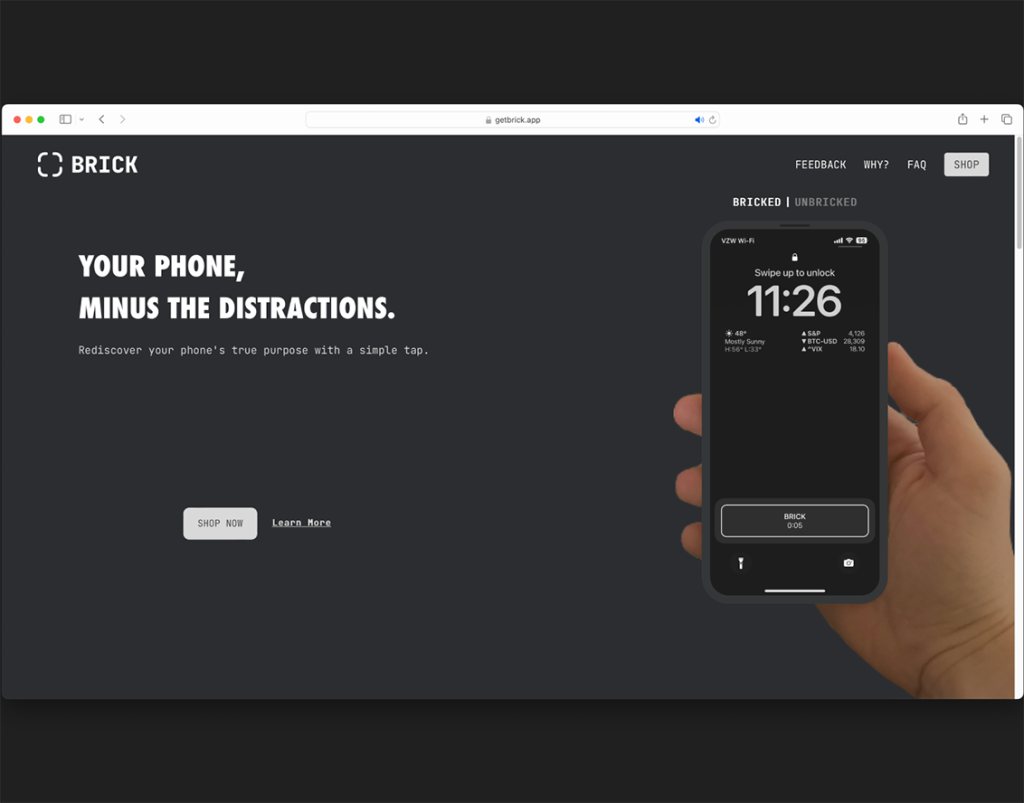
After several weeks of practice, I’ve summarized a general template suitable for most people:
Must-Block Apps (Recommended): TikTok, Instagram, YouTube, Facebook, Snapchat, Twitter, Reddit, Pinterest, Netflix, Discord.
Frequently Used Mode Configurations:
Study Mode: For studying/exam preparation, block all entertainment and social media apps, focusing for 50–90 minutes.
Deep Work Mode: For deep work, block social media, news, and shopping, physically isolate the phone, recommended for 2–3 hours continuously.
Family/Sleep Mode: For spending time with children or before bed, only keep essential communication and parenting apps enabled to improve the quality of time spent together or sleep efficiency.
I’ve found that combining Brick with these contextualized settings yields results far exceeding the limitations of simple software. Whether studying, working, spending time with family, or sleeping, the physical steps before reaching for my phone give my brain time to reconsider.
A Truly Practical Focus Tool
After using it for a month, my biggest takeaway is that my focus is no longer interrupted by unconscious screen scrolling, time management has become truly executable and quantifiable, and phone use has transformed from a passive reaction to an active choice. For me, Brick is more than just a tool to quit using my phone; it’s a lifestyle design that allows you to create practical focus plans tailored to your specific situations, rather than relying entirely on willpower.